Structure that reflects the operation
Represent regions, sites, departments, and nested work areas. Use scoped access and ownership so local teams see the work relevant to them.
For multi-site operators and regional safety leaders
Give local teams clear ownership while leaders see the regional picture. Connect site structure, inspections, actions, equipment, workforce readiness, and drillable analytics in one operating system.
Regional sample scenario · site assets and repeated signals · no credit card
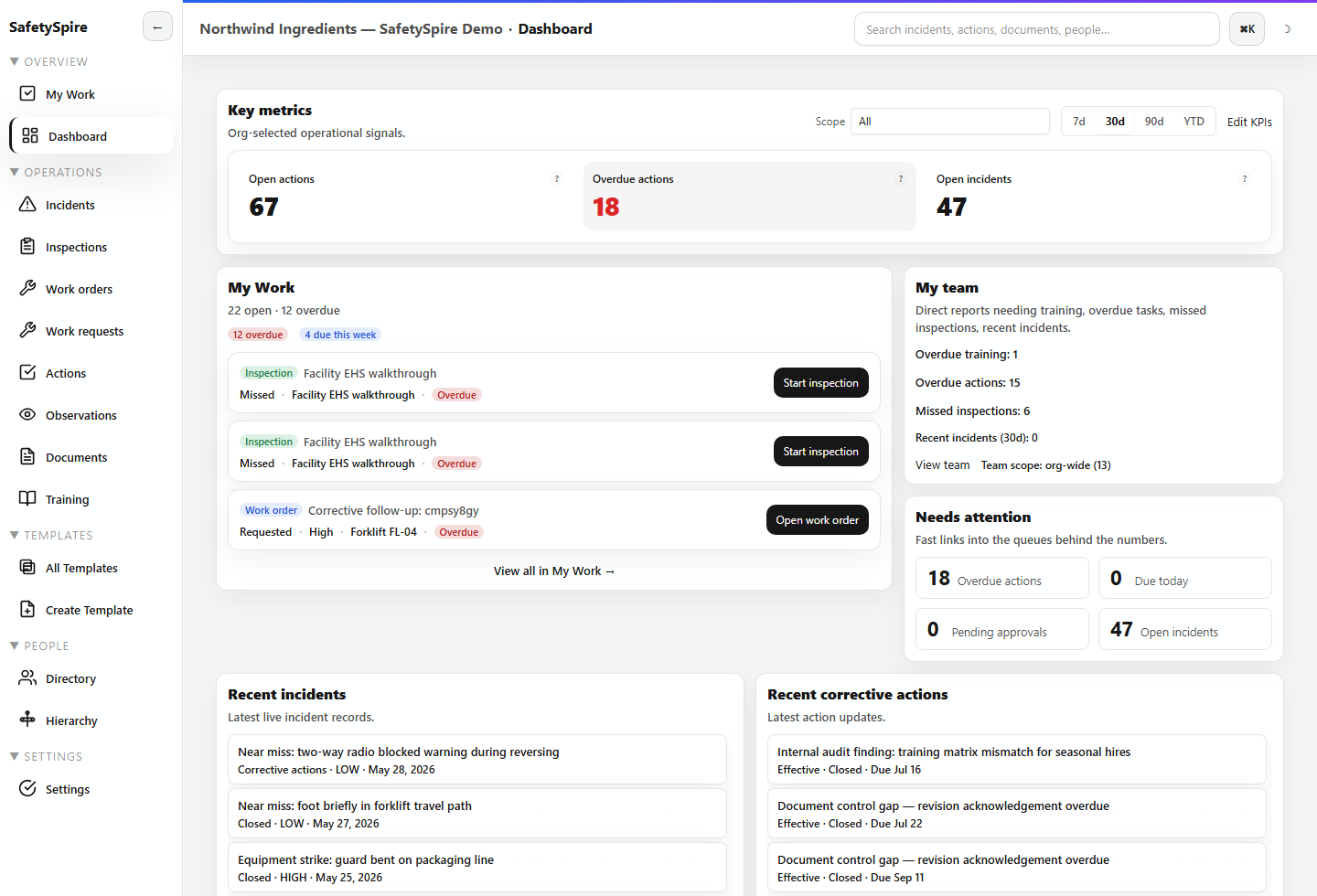
Governance with local ownership
Model your locations, standardize the work, and retain enough context to explain differences between sites.
Each site keeps its own incident and maintenance response. A regional leader can compare the common risk, investigate the underlying records, and decide whether the operating standard needs to change.
Represent regions, sites, departments, and nested work areas. Use scoped access and ownership so local teams see the work relevant to them.
Reuse templates and schedules across sites. Configure failure policies and follow-up rules so a finding enters a defined response process.
Bring qualifications, training, controlled procedures, asset condition, and maintenance into operational decisions. Supported worked-time and exposure context adds perspective.
Use consistent definitions, time windows, and site scope. Drill from dashboards, analytics, or scorecards to records before deciding what needs a wider response.
Product walkthrough · sample scenario
Explore the screens in order. Use the controls at your own pace; each image can be opened full size.
Step 1 of 5
Use scope controls and drillable measures to find overdue work and readiness gaps that need attention.
Step 2 of 5
Compare the context behind repeated events before treating a count as a pattern.
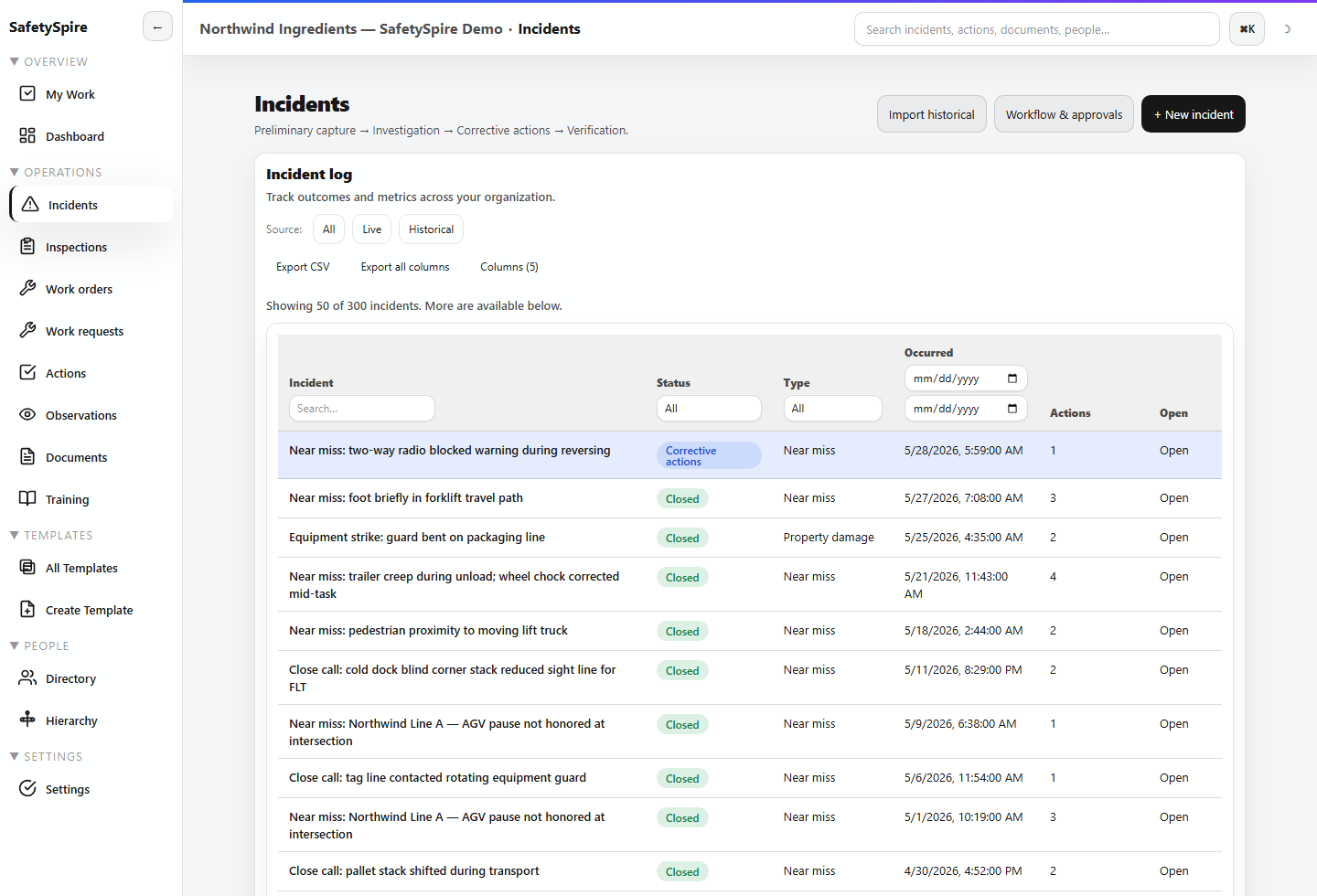
Step 3 of 5
Review due, missed, submitted, and finding views against the programs each site is expected to run.
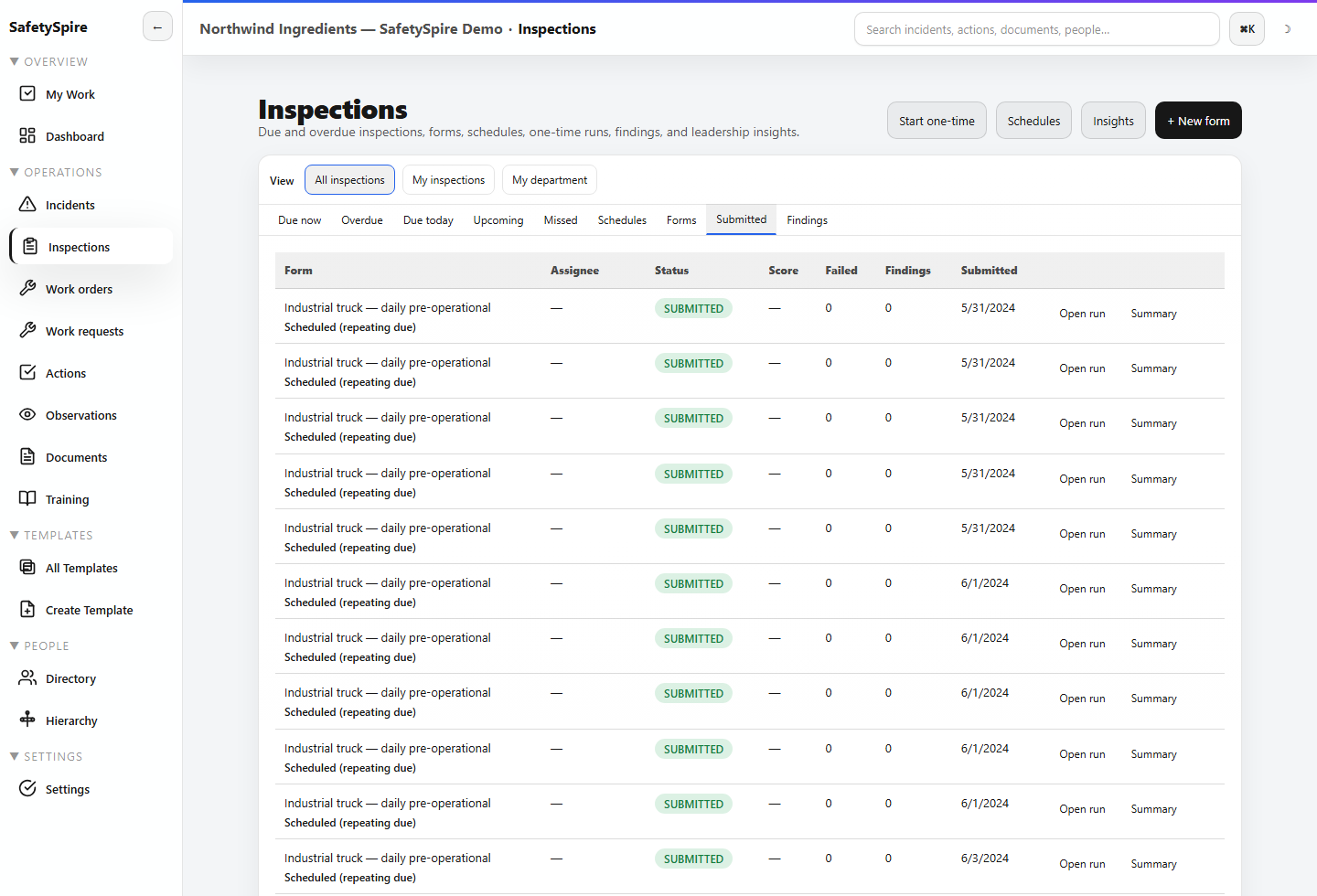
Step 4 of 5
Keep asset maintenance and work orders visible alongside the safety issues they support.
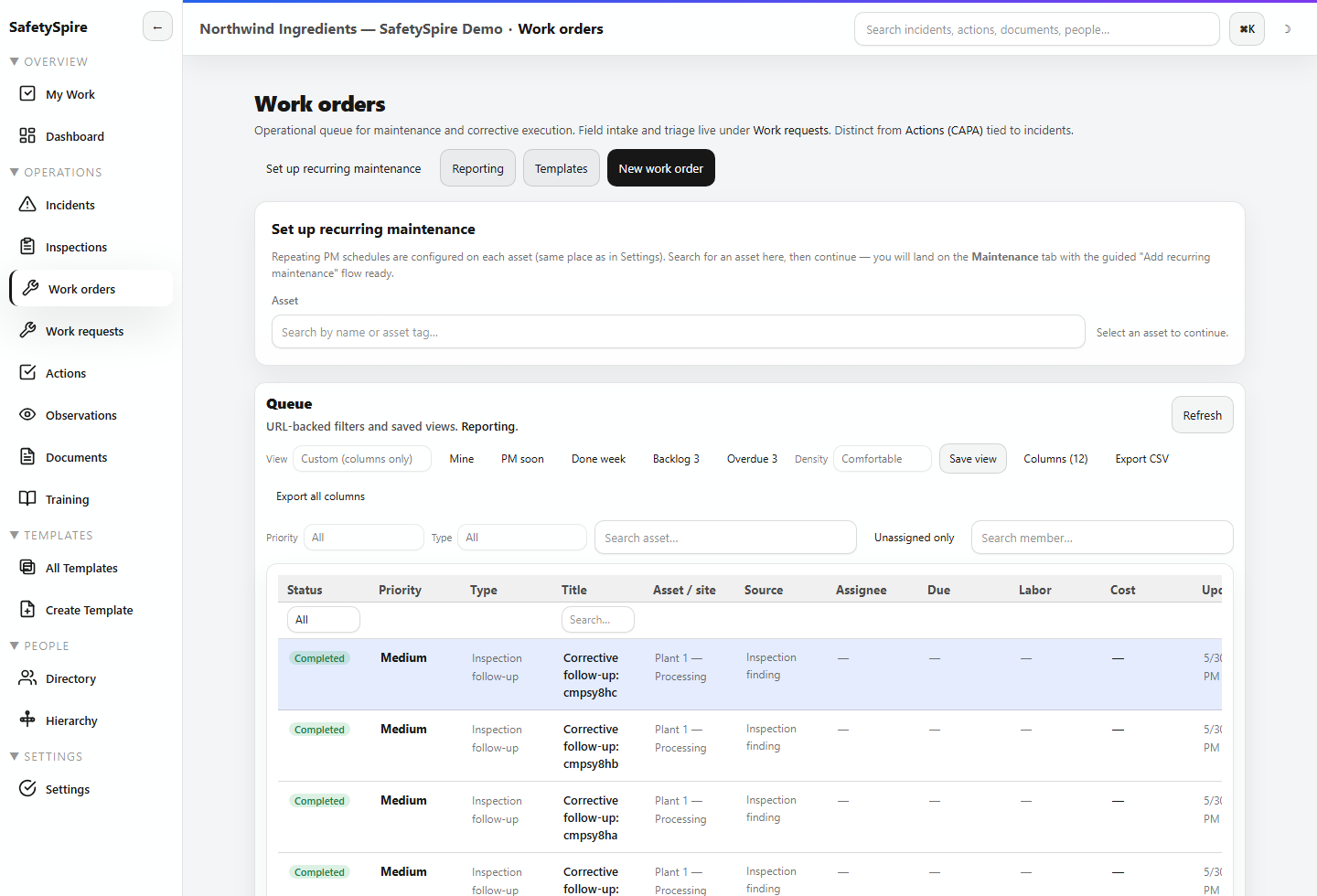
Step 5 of 5
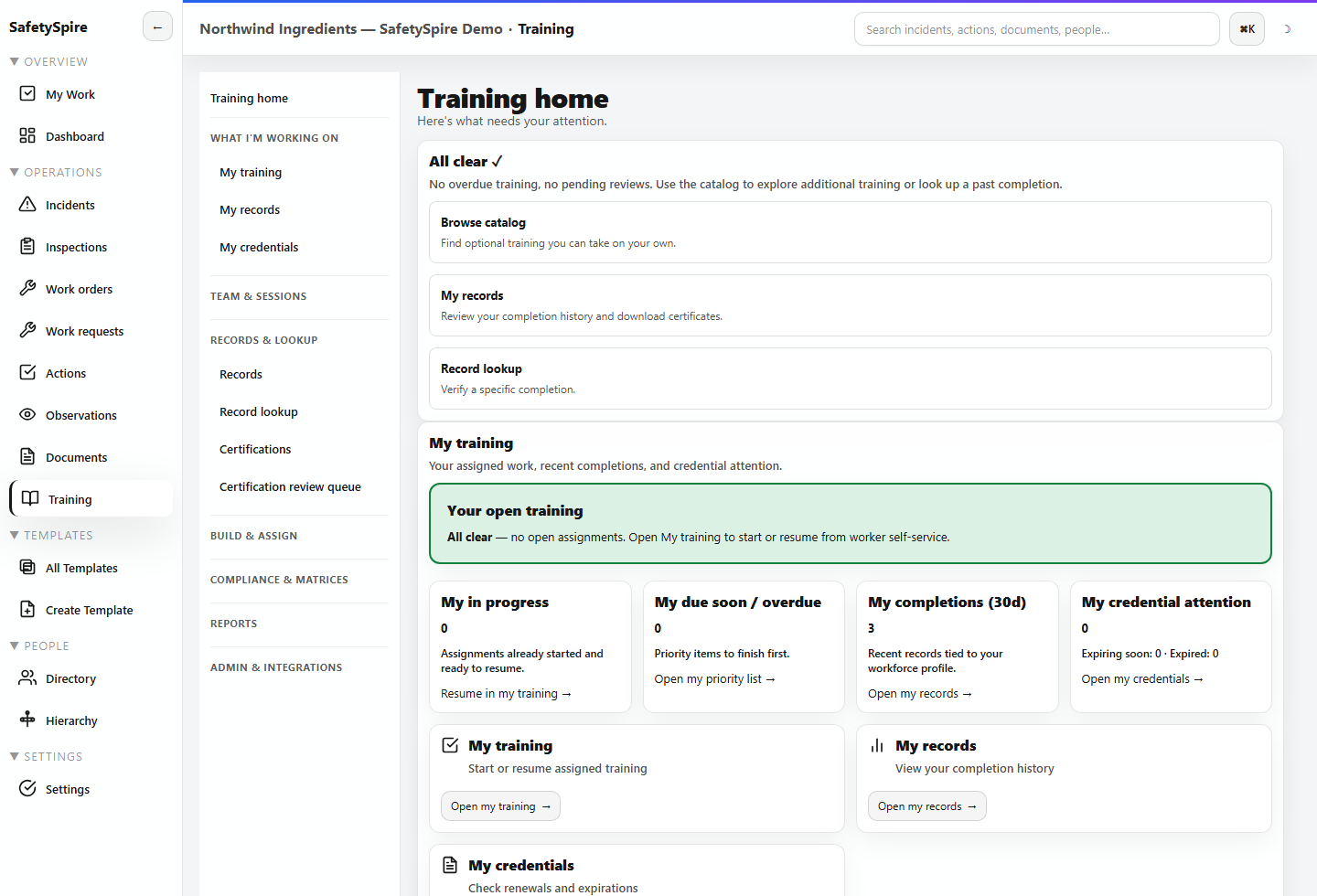
Review training assignments and completion evidence as part of the site’s operating readiness.
Rollout and administration
Use the sample scenario to test your hierarchy, access boundaries, assignment model, and reporting questions before expanding.
MFA policy, scoped permissions, audit activity, and configurable retention support administration. Identity, workforce, API, and webhook integrations are available with setup.
Explore operations, analytics, and integration scope →The published pricing model is based on active billable memberships. Sites and locations describe your operating structure. Confirm any custom commercial terms for your organization.
Scoped permissions and assignments support local responsibility. Validate the intended scope with representative roles before rollout.
Comparisons depend on consistent configuration, definitions, time windows, and enough data. Exposure and staffing context should be considered where relevant.
Supported APIs, webhooks, identity, and workforce integrations are available with setup. We review the source system and workflow before promising a connection.
Make the next step concrete
Follow local work and regional decisions in the multi-site sample workspace.