Comprehensive Safety Audit & Action Plan · Nationwide

Know where your safety program breaks down and what to address first.

An on-site assessment of workplace conditions, safety programs, and the processes behind recurring gaps, with evidence-backed findings, risk-based priorities, and practical recommendations for corrective action.

Led by Dustin Briggs, CSP Field observation · Program review · Employee input

A report built for decisions

See the finding.
Understand the next move.

Your audit should help a supervisor plan corrective work and help leadership understand where resources are needed.

Executive summary
The most important risks, strengths, recurring themes, and decisions requiring leadership attention.
Evidence-backed findings
Observed conditions, affected activities or locations, relevant assessment criteria, and photographs where they clarify the issue.
Prioritized recommendations
Risk ranking, recommended corrections, suggested timeframes, and cost or effort groupings that distinguish quick fixes from larger projects.
A usable handoff
Findings organized for assignment and planning, with an optional closeout discussion to review priorities and questions.

The proposal confirms locations, assessment criteria, report format, and follow-up services before the audit begins.

SafetySpire / Audit briefingSample

Illustrative executive summary

Chemical review needs a clear handoff.

The example finding raises a broader question: is the same introduction process used by every location?

  1. Review the current condition

    Confirm which products and activities are affected and what immediate controls are needed.

  2. Resolve the process gap

    Define purchasing, review, and supervisor responsibilities before the next product is introduced.

  3. Check across locations

    Determine whether other sites use the same process and need a common correction.

The leadership decisionWho owns the process, what resources are needed, and how will completion be checked?

Demonstration of the reasoning and deliverable structure. This is not a customer report or a completed audit result.
How we assess

Compare the written program with the work.

Records, observation, and conversations inform one another throughout the audit. When they tell different stories, we investigate the difference.

01 / Records

What is expected?

Review written programs, training records, inspection records, and evidence that previous corrective work was completed.

02 / Observation

What happens in practice?

Observe work areas, equipment, tasks, and conditions. Compare what is happening with the controls the organization expects.

03 / Conversations

What explains the difference?

Speak with employees and supervisors about expectations, resources, concerns, and the decisions that shape daily work.

Follow the process behind the finding

A safety data sheet is one part of chemical management.

We examine how a product is selected, approved, documented, communicated, and put into use. That helps identify whether a missing record is an isolated omission or a gap in how new chemicals enter the operation.

The same reasoning applies when examining training readiness, equipment condition, or unresolved inspection findings: what allows the gap to develop, and what will keep the correction in place?

Scope follows your operations

From a work area to a program across locations.

For public works, industrial operations, and organizations coordinating several sites, the scope should reflect the work, exposures, and decisions that matter.

Facilities and work areas

Shops, yards, storage, equipment, and the conditions employees encounter in the agreed audit areas.

Programs and records

Written expectations, training documentation, inspections, maintenance records, and evidence of follow-through.

Work practices and controls

How tasks are performed, controls are used, and employees are prepared for the work assigned to them.

Safety management conditions

Observable accountability, communication, resources, and employees’ ability to raise concerns and obtain a response.

Patterns across locations

Where conditions are local and where a shared program, purchasing process, or management practice calls for a common response.

Standards and benchmarks

The requirements and criteria agreed for your operation, including relevant OSHA standards or selected benchmarks where appropriate.

Leadership observations are part of understanding the work. A formal culture assessment, specialized exposure sampling, engineering evaluation, or implementation project is scoped separately when needed.

Priorities leadership can use

Turn findings into resource decisions.

Risk ranking considers exposure and potential severity. Correction planning also needs to account for effort, dependencies, and resources.

We help distinguish conditions needing prompt attention, routine corrective work, and longer-term changes. Cost and time groupings support planning; they are not contractor quotes or guarantees of completion.

Supervisors
Understand the condition, recommended correction, and suggested timeframe.
Safety and operations
Coordinate shared issues, clarify ownership, and identify dependencies.
Executives and governing bodies
See the significant themes, resource needs, and priorities that require a decision.

After the audit

Keep corrective work visible after delivery.

Agree on what will change, who will own it, and how progress will be reviewed. Follow-up consulting and software access can support that work when included in your engagement.

  1. FindingKeep the evidence and reason for correction together.
  2. Agreed actionDefine the work and any dependencies.
  3. Owner and dateMake responsibility and expectations clear.
  4. Completion evidenceRecord what changed and what supports closeout.
  5. ReviewCheck completion and whether further action is needed.

An option for managing the work

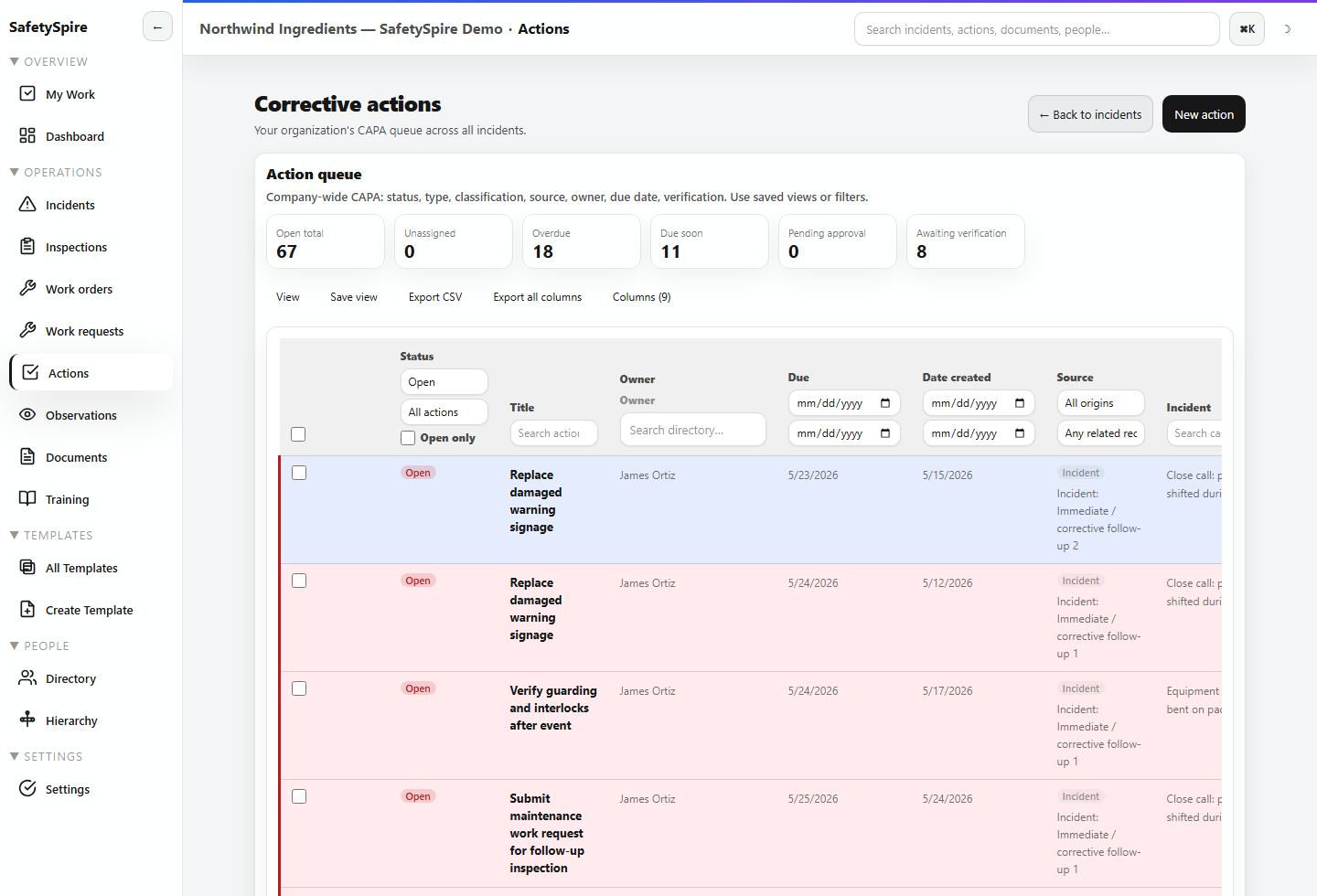
The SafetySpire application can connect corrective actions with owners, due dates, status, and supporting evidence. Leadership can review overdue work and items awaiting verification.

We can discuss loading audit findings and supporting your team’s handoff. Access, setup, data entry, and follow-up assistance are confirmed in the proposal.

Explore corrective-action follow-through
SafetySpire corrective-action queue showing owners, due dates, overdue work, and items awaiting verification in a sample workspace
SafetySpire application · Sample workspace. Select to enlarge.

Your audit lead

Dustin Briggs, CSP

Certified Safety Professional
Founder & Lead Safety Consultant

Experience in industrial construction and steel manufacturing, together with experience receiving audits and performing them, informs how Dustin approaches the work.

The focus is on understanding field conditions, explaining the reasons behind findings, and making recommendations useful to the people responsible for carrying them out.

Meet Dustin and learn about his approach

Start with your operation

Discuss your audit and assessment scope.

Tell us what you want to understand and which operations or locations are involved. We’ll reply by email to discuss the fit and next steps.

  1. Clarify the need.

    Discuss the reason for the assessment, operating context, and intended audience for the findings.

  2. Agree on the scope.

    Confirm locations, criteria, records, site access, and schedule.

  3. Define the deliverables.

    Set expectations for reporting, an action plan, a closeout discussion, and any follow-up or software support.

Prefer a conversation?
(903) 360-1346
dustin.briggs@safety-spire.com

Add scope and timing (optional)

We use these details to respond to your request. Please leave sensitive employee or incident information out of this form.